Senior pets: The role of laboratory testing in routine monitoring of ageing dogs and cats
Dr Emma Hooijberg BVSc PhD CertGP(SAP) DipECVCP MRCVS
NationWide Laboratories
Offering a health screening blood test has become routine in many UK small animal practices, but we may not always stop to consider why we are doing this. It is a service that is sometimes queried by clients when examining estimates, and if veterinary surgeons cannot promote and explain its utility, it is unfair to expect nursing and client care teams to do so. This article acts to serve as a reminder of why these tests (alongside urinalysis) can be far from routine, and can allow early detection of disease and better outcomes for our elderly patients.
Why is screening so important?
Many dogs and cats are surprisingly adept at hiding clinical signs of disease, especially from the non-clinically trained caregivers they live with. Even when signs are present (such as reduced activity, weight loss and behaviour changes), they are often dismissed by owners as their pet ‘just getting old’, and even more overt signs such as polydipsia and polyuria are not often recognised. Screening of blood and urine parameters can shed light on the pet’s overall health status, distinguish age changes from true pathology, and also provide the concrete evidence that caregivers need to convince them action is required. Normalising routine screening as part of ongoing healthcare may help reduce the number of animals presented only at the point when disease is advanced. It also helps challenge the perception that a pet who has ‘never needed a vet’ is necessarily a healthy one, supporting earlier intervention and improved welfare.
Results within reference intervals are just as valuable as those that are abnormal, as they provide baseline data and an opportunity to map trends over time. This is also why the normalising of routine screening is so important, so that a client sees a test result within normal limits as the good news it is, rather than a waste of money.
Old age is not a disease… but disease is more likely
Research shows consistently that apparently clinically healthy animals may have haematology and clinical chemistry changes indicating underlying disease. A 2024 study in the USA showed that of the patients presenting as healthy for wellness checks, 20% of senior dogs had changes that could be associated with liver, renal and electrolyte problems, and >40% of cats had changes that could be associated with renal or endocrine disease.¹
Results from a single sample only show a snapshot of one moment in time, and sequential testing is as valuable, if not more valuable, than a single test. A prospective study published in the Journal of Veterinary Internal Medicine in 2025 took repeated measurements over a two year period and found that there was a 47% incidence of emerging neoplasia, alongside chronic kidney disease,
neurological disease and orthopaedic disorders. Physical examination was only one element of the screening protocol, with bloodwork and urinalysis forming the other key parameters measured.²
Defining the senior patient
In dogs, there is no universal age cut-off for senior status because lifespan varies widely between breeds and sizes. Current guidance defines senior dogs as those in the last 25% of their expected lifespan.3 In cats, senior is generally defined as over 10 years of age, although some may reach this stage earlier.4 Geriatric is better thought of as a description of health status rather than age alone, with frailty and functional decline often providing a more useful clinical guide.
Welfare implications
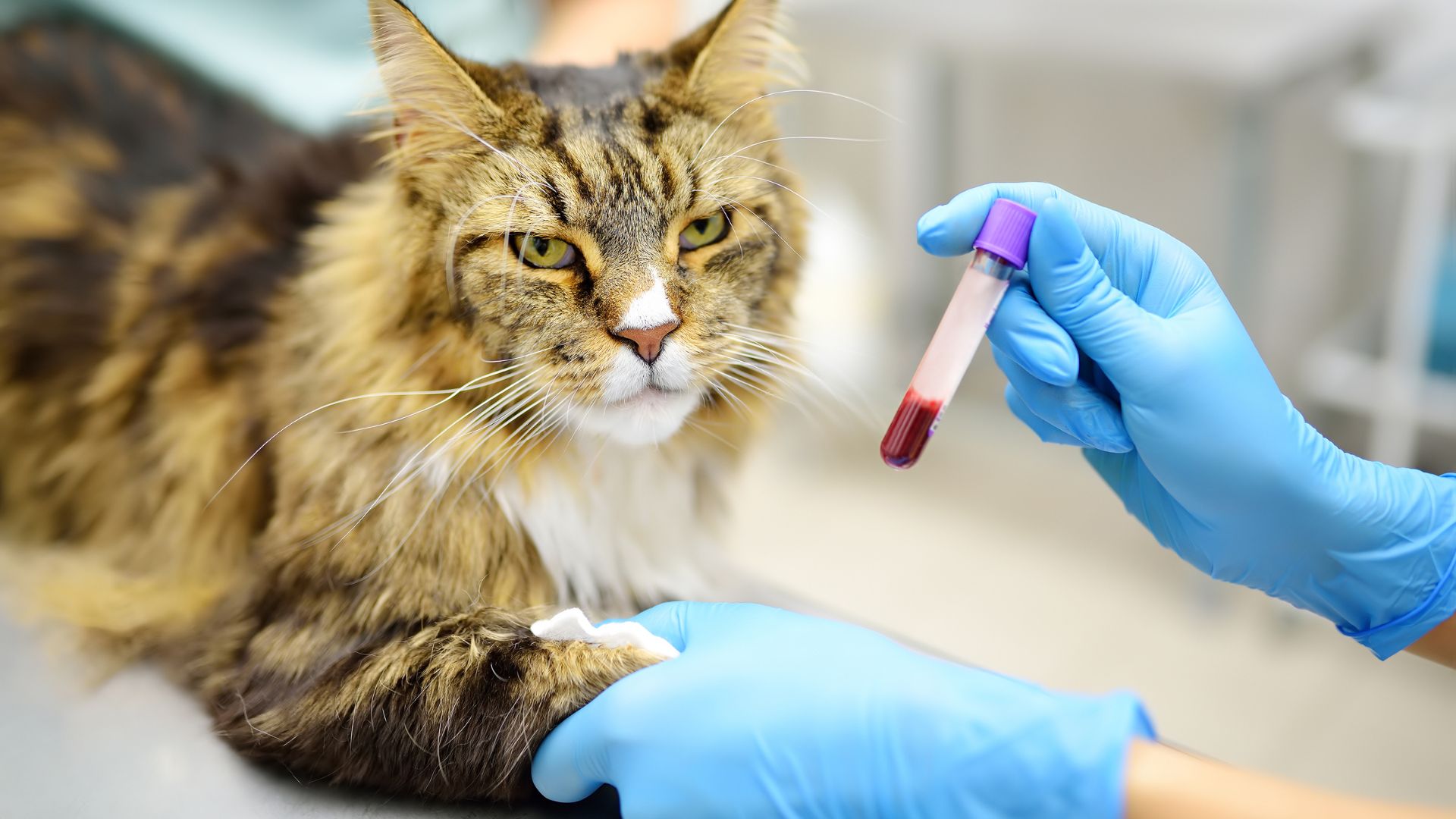
Whilst the ethics of diagnostic investigation in elderly patients are always worthy of consideration, in the vast majority of cases, blood sampling and the collection of urine are simple pain-free procedures that can bring considerable welfare benefits for the animal involved. Any potential negative impact associated with these procedures can be significantly mitigated through compassionate handling principles, such as those advocated by the Fear Free accreditation scheme.5
Knowledge of vital organ function can allow appropriate prescribing of pain relief in patients suffering from arthritis, give confidence for a general anaesthetic to allow extraction of painful teeth or reassure a caregiver that treating for neoplasia is a worthwhile option, amongst other examples.
Human welfare is also worth considering in this context, as routine screening can empower a caregiver to enjoy the bond with their pet for their full potential lifespan, knowing that they are treating what they reasonably can. It can also aid a decision for euthanasia at the time most appropriate for the pet, if repeated test results show deterioration.
What should we be routinely monitoring in senior pets?
The 2023 AAHA Senior Pet Guidelines recommend a minimum diagnostic database every 12 months, and in some cases every 6 months.3 This should include:
· Haematology
A complete blood count offers insight into red blood cell mass, immune system function and clotting capabilities. Early indications of blood loss, destruction or production issues can be seen, alongside evidence of acute or chronic infection and inflammation. Microscopic examination of blood smears is essential as alterations in cell morphology cannot be detected by most point-of-care haematology analysers.
· Serum biochemistry
Biochemistry is key to understanding the current status of organ function, hydration status, electrolyte balance and metabolic and endocrine health. Kidney function can be assessed through urea and creatinine levels, with the addition of SDMA sometimes useful. Based on canine biological variation data, changes in creatinine over time of >25-30% from a baseline indicate a clinically significant decline in GFR, even if creatinine remains within the reference interval. Creatinine must be measured with the same assay method each time. Monitoring trends in creatinine can allow for early detection of declining renal function. Screening for liver disease can be performed via ALT, ALP and GGT measurement, with albumin, glucose, cholesterol and bilirubin, urea and bile acids serving as indicators of hepatic function. Glucose and cholesterol are useful screening tests for metabolic and endocrine disorders. Calcium can be a useful indicator of endocrine and neoplastic disease, and total T4 should be included, especially in cats.
· Urinalysis
In senior pets, urinalysis primarily provides information about renal tubular function (USG), glomerular integrity (urine protein) and is useful as a screening test for diabetes mellitus (glucose). Urine sediment evaluation can give further information in patients with clinical signs of dysuria. Urine protein : creatinine ratios are an essential part of monitoring for any patient with renal impairment.
The AAHA guidelines consider these tests a minimum, but would encourage any senior wellness screen to also include blood pressure monitoring, mobility testing, dental assessment and evaluation of cognitive function – all areas where timely intervention can improve outcomes through diet, medical treatment and environmental modification.
Renal screening in senior cats6
– In older patients, muscle loss may reduce creatinine and mask renal dysfunction.
– Generally, creatinine does not increase above the population-based reference interval until 75% of renal function is lost and will take even longer to show an increase above the reference interval in thin cats.
– However, serial increases in creatinine of 25-30%, even if within the reference interval, indicate a clinically significant decrease in GFR for that patient, and thus the presence of renal disease.
– SDMA has been shown in initial research to increase with decreasing GFR earlier than creatinine, although several recent clinical studies have shown that it is not more sensitive than creatinine for diagnosing renal disease.
– In some cases, SDMA may help identify reduced GFR earlier and can add value to routine senior screening, although due to high biological and analytical variation of SDMA (dispersion), multiple measurements are needed to determine the true value in the patient, and for staging.
– Renal markers should be interpreted together with urinalysis findings, as well as body condition and blood pressure; serial measurement is invaluable.
New approaches to routine screening
Laboratory tests are developing and improving all the time, with many set to revolutionise the way we approach senior pet screening.
DNA profiling is one such avenue, where the aim is to identify inherited health risks before they manifest clinically. A fair proportion of the caseload seen in veterinary medicine is directly related to genetic disease and cardiomyopathies, coagulopathies and degenerative disorders are among those where early intervention can improve outcomes for affected patients. It may also improve welfare in the wider population through breeding programmes, although this aspect is less relevant in senior patients.
Blood based cancer biomarker tests are also now available, such as NuQ® which measures circulating nucleosomes, the fragments of DNA released during cell death. The test can help identify patients who may have cancers such as lymphoma and haemangiosarcoma, even at early stages and preliminary data also suggests that it may be able to detect some instances of mast cell tumours, malignant melanoma and histiocytic sarcoma.
The release of nucleosomes into the blood is common to many different types of cancer and follow up tests including biopsy are required for definitive diagnosis. However, by screening dogs routinely with this test, those dogs that may benefit from further investigation can be identified and potentially treated at an earlier stage of the disease where achieving remission is more likely.
Practical application in first opinion settings
Practices often have much of the equipment needed for senior pet health screening and well maintained in-house analysers can be valuable for prompt initial assessment. As with any diagnostic process, their usefulness depends on good sample handling, robust and frequent quality assurance and team members who are confident in maintenance, operation and interpretation.
For many practices, however, external laboratories remain an essential part of senior health screening. Senior or geriatric profile screens can help focus attention on key parameters, and in busy clinics they also remove some of the practical burden from in-house systems. External testing offers the additional advantage of stringent quality assurance, lower analytical error and pathologist interpretation, helping to identify subtle abnormalities and trends, while haematology is supported by blood smear assessment.
Client engagement
Engaging clients and normalising routine screening throughout the life of the pet is key to the success of monitoring in seniors – you cannot change what you do not measure! As practice health plans move away from the blanket use of parasiticides, added value can still be retained beyond vaccinations and discounts by incorporating senior wellness screens as part of pre-paid packages.
Incorporating these tests into the work flow of a normal day is just as important to ensure there is no additional burden on staff. Use of pre-visit communications (such as email and texts) can direct owners to resources such as the Ageing Canine Tool Kit (a joint venture between the University of Liverpool, BSAVA PetSavers and NationWide Laboratories) and help to get clients thinking about the subject prior to being in practice where they may feel put on the spot. Proper utilisation of nurse clinics and diary management can mean that a patient can be seen by a nurse for their samples before moving on to see a vet to discuss the results, all within one visit that does not seem overly onerous to the caregiver.
Offering tests as a standard part of the cost of any general anaesthetic or sedation fee can also provide a touchpoint for screening, and when communicated effectively, can often allay client fears around the procedure itself.
Conclusion
Far from being a standard tick box exercise, when used appropriately routine health screening of elderly patients can provide valuable insights into their risk of clinical disease long before it starts to
cause problems. Many diseases of elderly patients are insidious in nature and can cause significant welfare issues prior to diagnosis, so the use of simple blood and urine tests alongside physical examination can provide a window of opportunity to pre-empt these problems before they cause harm. Improved welfare and clinical outcomes may be the key benefits for patients and their vets, but with the increased humanisation of pets in the eyes of their caregivers, offering proactive personalised care for individual pets is a key opportunity for bonding clients to the practice.
Original publication: Vet Times (14 July 2026), Volume 56 , Issue 28 , Pages 6-9
About the author
Emma Hooijberg is a board-certified veterinary clinical pathologist with experience in both commercial diagnostic laboratory work and academia, and has authored more than 60 peer-reviewed scientific publications. Areas of special interest and expertise include laboratory quality assurance, clinical pathology of non-domestic species and teaching and continuing education.
References
1. Schoolet, E. Hegarty, E. & Michael, H. T. (2024) Frequency of Laboratory Abnormalities in Dogs and Cats Presenting to Veterinary Clinics in the United States for Wellness Visits. https://papers.ssrn.com/sol3/papers.cfm?abstract_id=5010477
2. S.Marynissen, F.Mortier, L.Duchateau, P.Smets, S.Daminet, and D.Paepe, “Exploring the Importance of Repeated Health Screening in Healthy Older Dogs,” Journal of Veterinary Internal Medicine39, no. 4 (2025): e70166, https://doi.org/10.1111/jvim.70166.
3. Dhaliwal, R. et al. (2022) 2023 AAHA Senior Care Guidelines for Dogs and Cats. Journal of the American Animal Hospital Association. 59. 1-21. DOI: 10.5326/JAAHA-MS-7343
4. Ray, M. et al. (2021) AAFP Feline Senior Care Guidelines. J Feline Med Surg. 23(7):613-638. DOI: 10.1177/1098612X211021538
6. Chronic kidney disease (2025) Cornell Feline Health Center https://www.vet.cornell.edu/departments-centers-and-institutes/cornell-feline-health-center/health-information/feline-health-topics/chronic-kidney-disease